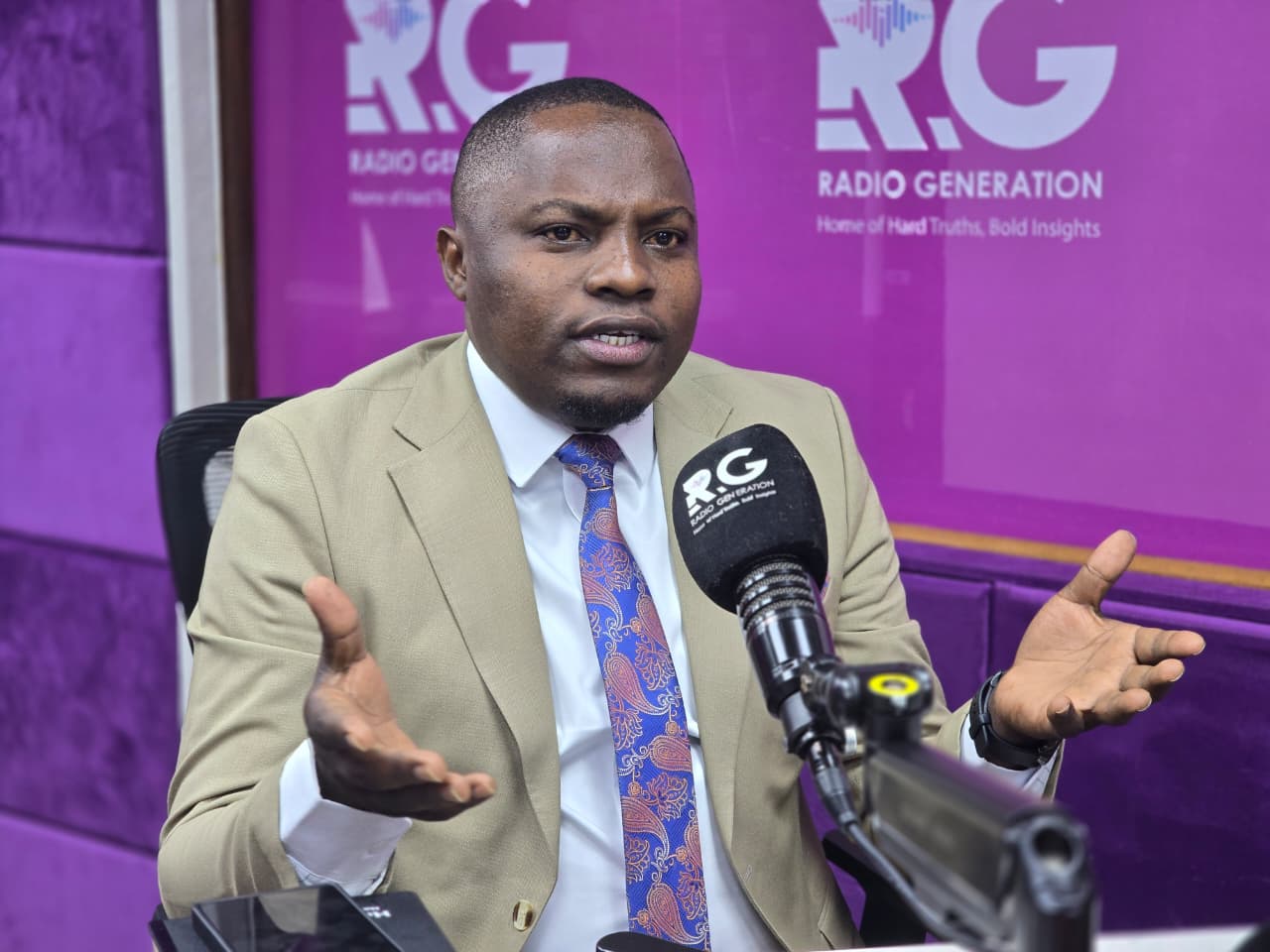
Kenya’s health system is struggling not because of hospital failures, but due to weak disease prevention, poor sanitation, and underfunded frontline health workers, according to Brown Ashira Olaly, CEO of the Kenya Environmental Health & Public Health Practitioners Union (KEH&PHPU). He warns that most illnesses flooding hospitals could be avoided if public health services were well-resourced, structured, and led by trained professionals.
Speaking on Radio Generation on Thursday, Olaly painted a grim picture of a system overwhelmed by preventable diseases, misaligned priorities, and inadequate structures.
He criticised the country’s hospital-centric approach, saying it has overshadowed the importance of community-level prevention, where most health challenges begin.
“We focus on preventing diseases, protecting lives, and extending population health,” Olaly said. “Health is a state of complete physical, mental, and psychological well-being—not just the absence of disease.”
The public health leader said Kenya is paying a heavy price for neglecting preventive medicine. He noted that about 70 percent of infections reported in health facilities could be prevented, citing unsafe water, poor sanitation, communicable diseases, and limited health education as key drivers.
“When people fall ill, productivity drops,” he explained. “Students miss school, workers underperform, and communities weaken. Strong nations are built on robust public health.”
Olaly highlighted rising cases of malaria, HIV infections among adolescents, diabetes, hypertension, and cancer as signs of systemic failure. He described overcrowded cancer wards at Kenyatta National Hospital, where patients often break down as hospitals struggle to cope.
Environmental hazards, including unsafe waste disposal, also contribute to the crisis. “Cancer can be caused by simple factors,” he said, pointing to reports of hazardous and nuclear waste dumping in Meru and Garissa. “Rainwater carries these contaminants into the soil and water consumed by communities.”
According to Olaly, public health officers are intended to prevent such emergencies before they reach hospitals. “We are the first line of defence,” he said. “If diseases are managed at the household level, even top-tier hospitals would not be overwhelmed.”
He outlined Kenya’s public health governance, from the Ministry of Health down to county administrations, noting that while the framework exists on paper, implementation remains weak. Olaly criticised what he called a top-heavy system, where clinical doctors occupy positions meant for trained public health officers.
“Seventy percent of these functions should be public health-oriented, yet doctors dominate them,” he said. Despite repeated concerns raised to the Ministry of Health, he said little corrective action has been taken.
At the community level, Olaly clarified the role of Community Health Promoters (CHPs), previously known as Community Health Volunteers. “CHPs are not public health officers—they link households to healthcare services,” he said. Each CHP covers roughly 100 households, tracking risks such as TB defaulters, poor sanitation, and lack of mosquito net use.
He also criticised their inadequate stipends—Sh2,500 from the national government and Sh2,500 from counties—calling for permanent, pensionable terms to ensure stability and motivation.
Trained public health officers are produced locally by institutions such as Kenya Medical Training Colleges, the University of Nairobi, Kenyatta University, and JKUAT. “Public health officers are trained specialists; they form a core part of what we do,” Olaly stressed.
He warned that without a shift toward prevention, Kenya will remain trapped in a cycle of disease outbreaks and overwhelmed hospitals. “An ounce invested in public health is worth a pound of cure,” he said, urging policymakers to act before the system collapses further.































Comments
Sign in with Google to comment, reply, and like comments.
Continue with Google